
Choosing between daycare and a babysitter can feel confusing for many parents because both options offer very different childcare experiences. Some families prioritize flexibility and one-on-one attention, while others prioritize structured routines, social interaction, and long-term childcare consistency.
The best option depends on your child’s personality, your schedule, budget, and the type of support your family needs most.
Here’s a quick comparison parents often look at:
| Feature | Daycare | Babysitter |
| Childcare setting | Group environment | Usually, in home care |
| Social interaction | High | Limited |
| Flexibility | Fixed schedules | Often more flexible |
| Cost structure | Tuition based | Hourly payment |
| One-on-one attention | Shared caregiver attention | More individualized |
| Reliability | Structured staffing | Depends on sitter availability |
Both options can work very well depending on the family situation. Below, we’ll break down the key differences between daycare vs babysitter services so parents can better understand which choice fits their lifestyle and childcare goals.
We mainly offer two daycare options for parents: drop in childcare for flexible care and Regular hours childcare for consistent routines.

Core Differences Between Daycare and a Babysitter
The biggest difference between daycare and a babysitter is the type of childcare environment children experience.
Daycare typically involves:
- Structured daily routines
- Group activities
- Multiple children
- Licensed childcare environments
- Professional caregiving staff
A babysitter usually provides:
- One-on-one care
- Childcare inside the family home
- Flexible scheduling
- Personalized routines
- Short-term or occasional support
Some parents prefer daycare because children interact with peers and participate in educational activities throughout the day. Others prefer babysitters because children remain in familiar surroundings and receive more individualized attention.
Another major difference is the consistency of structure. Daycare environments often follow predictable schedules with meals, naps, playtime, and learning activities, while babysitting routines may vary depending on the caregiver and family preferences.
Cost Comparison
Cost is one of the biggest deciding factors for families comparing babysitter or daycare options.
In many cases:
- Full-time daycare offers more predictable monthly costs
- Babysitters provide flexibility but may cost more hourly
Here’s a general comparison:
| Cost Factor | Daycare | Babysitter |
| Payment type | Weekly or monthly tuition | Hourly rate |
| Multiple child care | Shared group cost | Higher cost for multiple children |
| Long-term affordability | Often, more affordable full-time | Can become expensive long-term |
| Flexibility cost | Less flexible pricing | Pay only when needed |
However, the “better” financial option depends on how often childcare is needed. Either way, it helps to map out the hidden daycare costs that can quietly add up.
For example:
- Families needing daily childcare may save money with daycare
- Families needing occasional evening or short-term care may prefer babysitters
Parents should also think about hidden costs, like:
- Transportation
- Late pickup fees
- Cancellation fees
- Last-minute babysitter rates
At Clever Daycare, families can compare flexible childcare options and better understand which setup works realistically for their schedule and budget.
Our childcare programs are designed for every early learning stage:
- Infant childcare in Calgary
- Toddler daycare in Calgary
- Preschool childcare in Calgary
- Kindergarten daycare in Calgary
Flexibility and Scheduling Differences
Babysitters Usually Offer More Flexible Scheduling
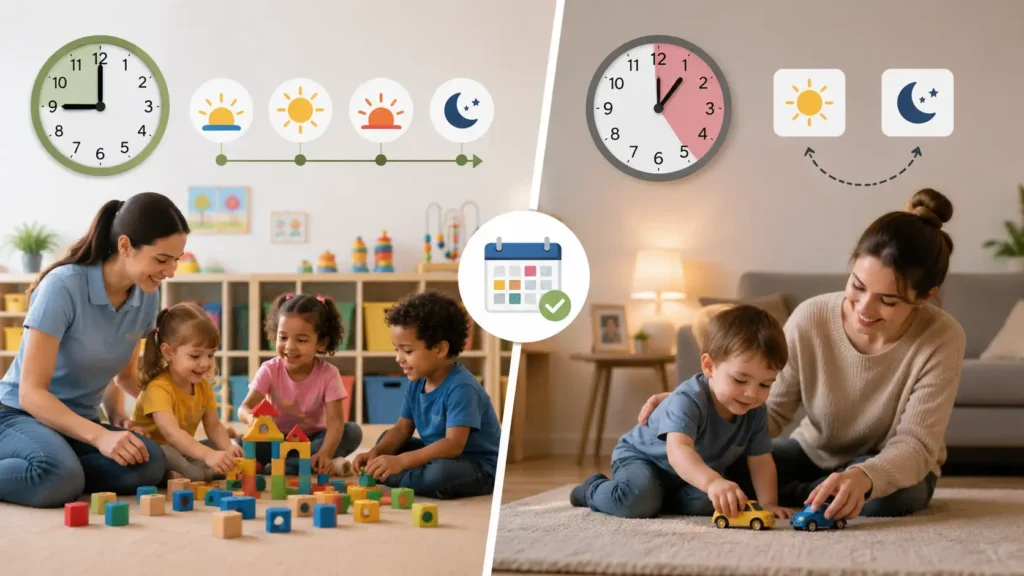
One of the biggest reasons parents choose babysitters is flexibility. Babysitters can often accommodate evening hours, weekends, short-notice requests, or changing schedules much more easily than traditional daycare programs. This can be especially helpful for parents working shifts, attending events, managing irregular work hours, or needing occasional childcare support. If you are weighing in-home help, our comparison of drop-in daycare vs nanny services is a useful companion read. Since babysitting is usually arranged directly between the family and the caregiver, schedules can often be customized to the family’s exact needs.
Daycare Typically Follows Fixed Operating Hours
Most daycare centers operate on structured schedules with set drop-off and pickup times. Families usually need to follow consistent attendance routines and standard business hours throughout the week. While this may feel less flexible compared to babysitters, many parents appreciate the predictability and routine that daycare provides. Structured scheduling can help both children and parents maintain more organized daily routines over time.
Babysitter Availability May Sometimes Be Unpredictable
Although babysitters can provide flexibility, availability can occasionally be challenging due to the caregiver’s personal schedule, emergencies, illness, or other commitments. Parents sometimes need backup childcare plans when sitters cancel at the last minute. This can create stress for families who rely heavily on a single caregiver for important workdays or appointments.
Daycare Often Provides More Reliable Long-Term Coverage
Licensed daycare centers usually have multiple staff members available, which can make childcare coverage more dependable in the long term. If one caregiver is unavailable, other staff members can usually continue supporting the children without major disruptions. For working parents who need regular childcare throughout the week, this level of consistency and reliability can be a major advantage over relying on a single babysitter.
Some Families Combine Both Options for Better Flexibility
Many families eventually realize they do not have to choose only one childcare solution. Some parents use daycare during regular workdays while also hiring babysitters for evenings, weekends, emergencies, or occasional schedule gaps. Combining both options can sometimes provide the best balance between structure, flexibility, reliability, and convenience, depending on the family’s lifestyle and childcare needs.

Child Development and Social Interaction
One major advantage of daycare is social interaction.
Children in daycare environments often:
- Build friendships
- Practice sharing
- Improve communication skills
- Participate in group learning activities
- Learn routines and cooperation
For many children, daycare supports emotional independence and prepares them for preschool or kindergarten settings. These developmental gains are among the lasting benefits of daycare for children.
Babysitters, on the other hand, provide more individualized attention and quieter environments. This may work better for:
- Very young infants
- Children with sensory sensitivities
- Kids who struggle in large group settings
- Families preferring home-based routines
Neither option is automatically better for child development. Different children thrive in different environments.
Our daycare centers are mainly located in these Calgary communities:

Safety, Supervision, and Reliability
Licensed Daycare Centers Usually Follow Structured Safety Standards
One of the biggest reasons many parents choose daycare is the structured safety environment. Licensed daycare centers are typically required to comply with provincial childcare regulations on staff ratios, emergency planning, cleanliness, supervision, and child safety procedures. Many programs also conduct staff background checks, safety training, and routine inspections. For parents, this can provide additional peace of mind, knowing that formal systems and policies are in place to support children’s safety throughout the day.
Babysitter Safety Depends Heavily on the Individual Caregiver
With babysitters, the level of safety and supervision often depends entirely on the caregiver’s experience, maturity, and reliability. Some babysitters are highly experienced and extremely dependable, while others may have limited childcare training. This is why parents usually need to spend more time checking references, asking detailed questions, and observing how the babysitter interacts with their child before feeling fully comfortable.
Daycare Environments Often Have Multiple Caregivers Present
Another difference between daycare and babysitting is the number of adults supervising children. In daycare settings, multiple caregivers are usually present throughout the day, providing additional support during emergencies, transitions, meals, or group activities. Parents may feel reassured knowing that children are not dependent on a single adult for supervision and care.
Babysitters Provide More Personalized One-on-One Attention
While daycare offers structured supervision, babysitters often provide more individualized attention because they care for fewer children at a time. This can be especially helpful for infants, children with specific routines, or children who feel overwhelmed in larger group settings. Some parents also prefer the comfort of knowing their child remains in a familiar home environment during care.
Reliability Can Look Different Depending on Family Needs
Reliability means different things for different families. Daycare programs often provide more consistent long-term scheduling because centers have backup staff available if one caregiver is absent. Babysitters may offer more scheduling flexibility, but cancellations or changes in availability can occasionally create challenges for parents needing dependable daily childcare. For this reason, some families prioritize the reliability of structured daycare, while others value the flexibility and personal connection a trusted babysitter can provide.

Which Option Works Better for Different Family Needs
Different childcare options fit different family lifestyles.
Daycare Often Works Better For:
- Full-time working parents
- Families needing regular childcare
- Children who enjoy social interaction
- Parents want structured learning environments
- Families seeking predictable routines
Babysitters Often Work Better For:
- Occasional childcare needs
- Evening or weekend care
- Infants needing individualized attention
- Families preferring home-based care
- Parents needing flexible scheduling
Some families also transition between both options depending on the child’s age and changing family needs over time.
Families unsure which setup fits best can contact Clever Daycare for guidance tailored to their schedule, childcare goals, and their child’s developmental needs.
How to Decide Between a Babysitter and Daycare
The best childcare decisions usually happen when families focus on their real daily needs instead of trying to choose the “perfect” option.
Helpful questions parents can ask include:
- Does my child enjoy group interaction?
- Do we need regular or occasional childcare?
- What childcare budget feels realistic?
- How important is schedule flexibility?
- Would my child feel more comfortable at home or in group settings?
- Which option reduces stress for our family in the long term?
It’s also completely normal for childcare needs to change over time. What works well during infancy may not be the best fit during toddler or preschool years. If a parent staying home is also on the table, see daycare versus staying home with a parent.
The goal is not to choose the option other families prefer. The goal is to find childcare that helps both the child and parents feel supported, safe, and comfortable. Once you lean toward daycare, our guide on how to choose the best daycare in Calgary walks through the rest.
FAQ
Is daycare cheaper than hiring a babysitter?
For full-time childcare, daycare is often more affordable because costs are shared across group care settings. Babysitters may be more cost-effective for occasional short-term care.
Is daycare better for social development?
Daycare usually offers more opportunities for social interaction, group activities, and communication skill development.
Are babysitters safer than daycare?
Safety depends on the quality of care. Licensed daycare centers follow structured regulations, while babysitter safety depends heavily on the individual caregiver’s experience and reliability.
Which option is more flexible?
Babysitters are usually more flexible for evenings, weekends, and changing schedules, while daycare programs often follow fixed hours.
Is daycare stressful for young children?
Some children need time to adjust, but many adapt well and enjoy routines, activities, and peer interaction over time.
Can families use both daycare and babysitters?
Yes. Many families combine daycare with occasional babysitting for evenings, emergencies, or schedule gaps.
Is a babysitter better for infants?
Some parents prefer babysitters for infants because of one-on-one care and home-based routines, though many daycare centers also provide quality infant programs.
How do I know which option best fits my family?
The best choice depends on your child’s temperament, your schedule, your budget, and the type of childcare support your family needs most.