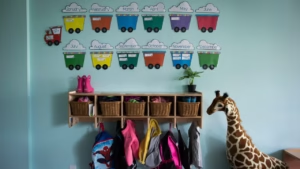
Choosing daycare is a big decision for most parents. The truth is, there’s no one-size-fits-all answer. For many children, daycare can support social skills, emotional growth, routines, independence, and early learning. But in some situations, children may need more time at home or a different type of care depending on their personality, age, and emotional needs. If you are torn on this, our comparison of daycare versus staying home with a parent weighs both sides.
Here’s a quick look at some common daycare pros and cons parents often consider:
| Potential Benefits of Daycare | Possible Challenges of Daycare |
| Helps children build social skills | The adjustment period can be emotional at first |
| Encourages routines and independence | More exposure to common illnesses |
| Supports early learning and communication | Some children struggle with separation anxiety |
| Gives children structured play opportunities | Quality varies between daycare centers |
| Helps prepare kids for preschool and school | Busy environments may overwhelm some children |
If you’re still unsure whether daycare is the right fit for your child, keep reading. Below, we’ll walk through the emotional, social, and learning benefits of daycare, along with signs that daycare may or may not work well for your family situation.
Our two main childcare services include flexible drop in daycare and dependable Regular hours daycare in Calgary for busy families.

How Daycare Supports Social and Emotional Development?
One of the biggest benefits of daycare for children is learning to interact with others outside the home. In a quality daycare environment, children spend time with peers daily, which naturally helps them practice communication, sharing, cooperation, and emotional regulation.
Children often learn:
- How to express feelings appropriately
- How to wait for their turn
- How to solve small conflicts
- How to build friendships
- How to feel comfortable in group settings
For shy children, daycare can gently encourage social confidence over time. For highly active children, structured group activities can help improve patience and listening skills.
Emotionally, daycare can also help children become more independent. They begin learning that trusted adults outside their family can also provide comfort, support, and guidance.
That said, emotional adjustment looks different for every child. Some children adapt within days, while others may need several weeks before feeling fully comfortable.
If you’re unsure how your child may react to daycare, the team at Clever Daycare can help you understand what type of daycare environment may fit your child’s personality and developmental stage best.
Cognitive and Learning Benefits of Daycare
A good daycare program is not just babysitting. Many daycare environments are designed to support early childhood learning through play-based activities, routines, storytelling, music, sensory play, and problem-solving.
Some daycare benefits for children include:
- Early language development
- Improved communication skills
- Exposure to numbers, letters, and shapes
- Better focus and listening skills
- Stronger memory and cognitive flexibility
Children also learn through observation. Watching other kids participate in activities often motivates younger children to try new things themselves.
Here’s how daycare activities commonly support development:
| Daycare Activity | Developmental Benefit |
| Story time | Language and listening skills |
| Group play | Social communication |
| Arts and crafts | Creativity and fine motor skills |
| Music and movement | Coordination and emotional expression |
| Structured routines | Predictability and self-regulation |
Many parents also notice that daycare helps children transition more smoothly into preschool or kindergarten because they are already familiar with routines, group activities, and classroom-style settings.
We offer daycare programs in Calgary for different age groups, including:
- infant daycare in Calgary
- Toddler childcare in Calgary
- Preschool daycare in Calgary
- Kindergarten childcare in Calgary

Daycare Pros and Cons Parents Should Consider
Every family situation is different, so it’s important to consider both the advantages and the challenges before making a decision.
Common Daycare Pros
- Children develop social interaction skills early
- Structured schedules can improve routines
- Parents gain support in balancing work and family life
- Children experience educational activities daily
- Kids learn adaptability and independence
Common Daycare Cons
- Some children experience separation anxiety
- Illnesses spread more easily in group settings
- Not every daycare offers the same quality of care
- Overstimulating environments may exhaust sensitive children
- Busy schedules can sometimes reduce family time
One important thing parents sometimes overlook is that daycare success often depends more on the quality of the daycare and the child’s temperament than on the daycare itself.
A warm, responsive daycare environment with experienced caregivers can make a huge difference in how children adjust and thrive. That is why it pays to know how to choose the best daycare in Calgary.
How Children Typically Adjust to Drop-In Daycare?
Children often need time to adjust to drop-in daycare, especially when attendance is less consistent than full-time care. During the first few visits, some children may feel shy at drop-offs, become emotional, or need extra reassurance in unfamiliar environments.
Most children gradually become more comfortable as they build familiarity with caregivers, routines, and the daycare setting. Consistent drop-off routines, positive caregiver interactions, and repeated visits often help make the transition smoother over time.
Some children settle within a few visits, while others may need several weeks before they feel fully confident and comfortable participating in activities and group interactions.

When Daycare Works Best for Children?
Daycare often works especially well for children who:
- Enjoy being around other children
- Show curiosity and interest in group activities
- Thrive with routines and structure
- Need more stimulation during the day
- Have working parents needing reliable childcare
Children who have fewer opportunities for regular peer interaction at home may benefit from the social experiences daycare environments can provide.
In many cases, children who attend daycare gradually become more comfortable communicating, participating in activities, and adapting to new situations.
Parents in Calgary often look for daycare not only for childcare support but also to help their child build confidence and school readiness in a safe environment.
If that sounds like your goal too, Clever Daycare can help you explore programs designed to balance learning, play, emotional support, and healthy routines.
We currently provide daycare services in three main Calgary locations:
Signs Your Child May Benefit from Daycare
Sometimes, children naturally show signs that they are ready for a daycare environment. Our guide to the signs your child is ready for daycare covers what to look for.
Here are a few common indicators:
- Your child seeks interaction with other kids
- They get bored easily staying home all day
- They enjoy structured activities
- They adapt reasonably well to new environments
- They show interest in learning and exploring
- They respond positively to routines
Even children who are initially shy can gradually benefit from daycare as caregivers gently and consistently introduce them to the environment.
It’s completely normal for children to cry during drop-offs in the beginning. What matters more is whether they eventually settle, engage, and feel safe during the day.

When Daycare May Not Be the Best Option?
Daycare is not automatically the best fit for every child or every stage. Some situations where daycare may require more consideration include:
- Severe separation anxiety that does not improve over time
- Sensory sensitivities to loud or busy environments
- Medical or developmental needs requiring specialized care
- Extremely long daycare hours are causing stress or exhaustion
- Daycare environments with high caregiver turnover
In these cases, parents may benefit from:
- Part-time daycare first
- Smaller daycare settings
- Gradual transition schedules
- Alternative childcare arrangements
The goal is not simply to put a child in daycare. The goal is to find an environment where the child feels confident, supported, and able to grow.
Many daycare programs in Calgary also support gradual transitions to help children adjust more comfortably during the first few weeks. Depending on the daycare, this may include shorter initial visits, partial-day schedules, parent-and-child orientation periods, or slower transitions into full-time care.
Some families also choose part-time daycare first before moving into a full weekly schedule. It can help to review the different types of daycare and match one to your child. Because infant and toddler daycare spots in Calgary can fill quickly, parents often benefit from exploring options early and asking providers how they typically support new children during the adjustment process.
Get Professional Advice on Whether Daycare Is Right for Your Child
Many parents feel pressure when deciding about daycare, especially when hearing different opinions from friends, family, or online discussions. Cost is part of the picture too, so our breakdown of hidden daycare costs can help you plan. But the best decision depends on your child’s personality, emotional needs, developmental stage, and your family’s daily reality.
At Clever Daycare, families can receive guidance on choosing age-appropriate daycare options, understanding adjustment challenges, and finding programs that support healthy emotional and cognitive development in a safe, nurturing environment.
FAQ
At what age is it best to start daycare?
There is no perfect universal age. Some children adjust well around 12 to 18 months, while others may do better starting later. Readiness often depends on temperament, routines, and family needs.
Is daycare good for shy children?
Yes, many shy children gradually become more socially confident through positive daycare experiences. Smaller class sizes and supportive caregivers can help ease the transition.
Do children in daycare get sick more often?
Children in daycare are usually exposed to more common viruses early on because they interact closely with other children. However, this exposure often helps strengthen immune systems over time.
How long does daycare adjustment usually take?
Some children adjust within a few days, while others may need several weeks. Consistency, calm drop-offs, and supportive caregivers usually help the process.
Can daycare help speech development?
Yes, daycare can support language development because children are exposed to conversations, songs, storytelling, and peer interaction throughout the day.
What if my child cries every morning at daycare?
Morning tears are common during periods of adjustment. The key is whether your child settles shortly after you leave and gradually becomes more comfortable.
Is full-time daycare too much for toddlers?
It depends on the child. Some toddlers do very well in full-time daycare, while others may benefit more from shorter or part-time schedules.
How do I know if a daycare is high-quality?
Look for responsive caregivers, clean and safe environments, low staff turnover, age-appropriate activities, clear communication with parents, and warm interactions between staff and children.