Alberta Heritage Day is a great opportunity to introduce young children to a very simple idea: families and communities can have different traditions, foods, languages, music, stories, and ways of celebrating, and learning about those differences can be fun.
In 2026, Alberta Heritage Day falls on Monday, August 3. You don’t need to give your toddler a history lesson to celebrate it. Try a new food together, listen to music from another culture, explore your own family’s traditions, read a multicultural picture book, make art, or visit a family-friendly cultural event in Calgary.
For toddlers and preschoolers, keep it hands-on. Culture becomes much easier to understand when children can see, hear, taste, create, and ask questions.
Our two main childcare services include flexible drop in daycare and dependable Regular hours daycare in Calgary for busy families.
What Is Alberta Heritage Day? A Simple Explanation for Kids
Alberta Heritage Day is celebrated on the first Monday in August.
It was established in 1974 as a day to recognize and celebrate the different cultural heritage of Albertans. Over the years, Heritage Day celebrations have become opportunities for communities to share food, music, dance, crafts, stories, and traditions.
For a preschooler, you can make the explanation much simpler:
“Heritage Day is a day when we learn about the different people, cultures, and traditions that are part of Alberta.”
Then explain what “heritage” means using something familiar.
You could say:
“Heritage includes things families share and pass along, like stories, food, music, celebrations, language, and traditions.”
You don’t need your child to memorize the definition.
The goal is simply to help them understand that every family has a story and that other families may do things differently.
One useful distinction for parents: Alberta Heritage Day isn’t the same as Alberta Day. Heritage Day is observed on the first Monday of August, while Alberta Day is September 1 and marks the anniversary of Alberta becoming a province.
We offer daycare programs in Calgary for different age groups, including:
Why Learning About Different Cultures Is Valuable for Young Children
Young children notice differences.
They notice different languages.
Different foods.
Different clothing.
Different skin colours.
Different celebrations.
Different family structures.
Instead of treating those observations as awkward, adults can use them to build curiosity and respect.
If your preschooler asks:
“Why are they wearing that?”
You don’t need to shut the question down.
Try:
“Different families and cultures wear different kinds of clothing. Let’s learn about it.”
That teaches your child that differences are something they can respectfully ask about and explore.
Cultural learning also gives children opportunities to understand that there isn’t always only one “normal” way to eat, celebrate, speak, dress, make music, or spend time with family.
For young children, those ideas are best introduced through everyday experiences rather than long explanations.
A song.
A picture book.
A meal.
A festival.
A story from a grandparent.
That’s enough to start.
Fun Ways to Celebrate Alberta Heritage Day With Young Kids
You don’t need to plan an entire Heritage Day curriculum.
Choose one or two activities your child will actually enjoy.
Try a food from somewhere new.
Choose a dish or snack connected to a culture your family wants to explore.
Talk about where it comes from and what ingredients are used.
Keep expectations realistic with toddlers.
The goal isn’t:
“You must eat this because we’re learning about another culture.”
It’s:
“This is something we haven’t tried before. Let’s explore it.”
Your child can smell it, touch it, help prepare it, or taste it if they want.
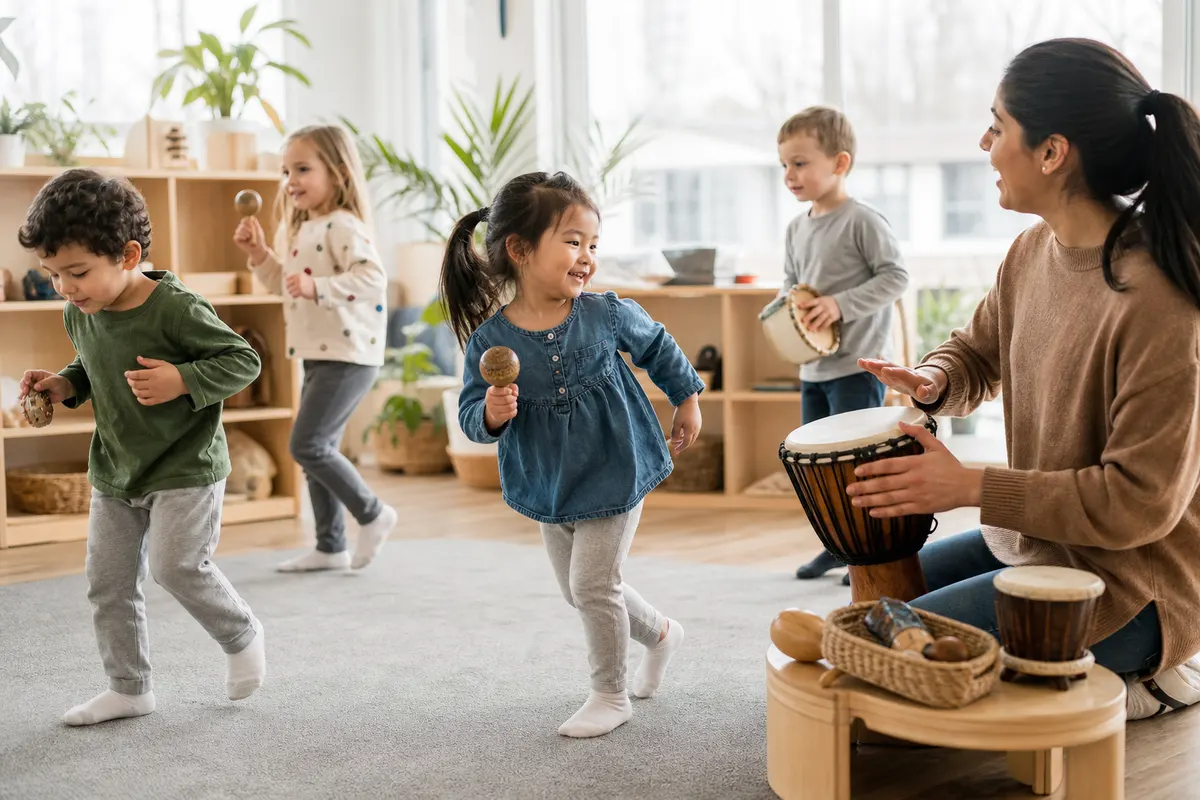
Listen and move to music from different cultures.
Music is one of the easiest Heritage Day activities for kids because toddlers don’t need much explanation to participate.
Play music from different places and move together.
Can you clap to the rhythm?
Can you move slowly?
Can you move quickly?
Do you hear instruments you’ve never heard before?
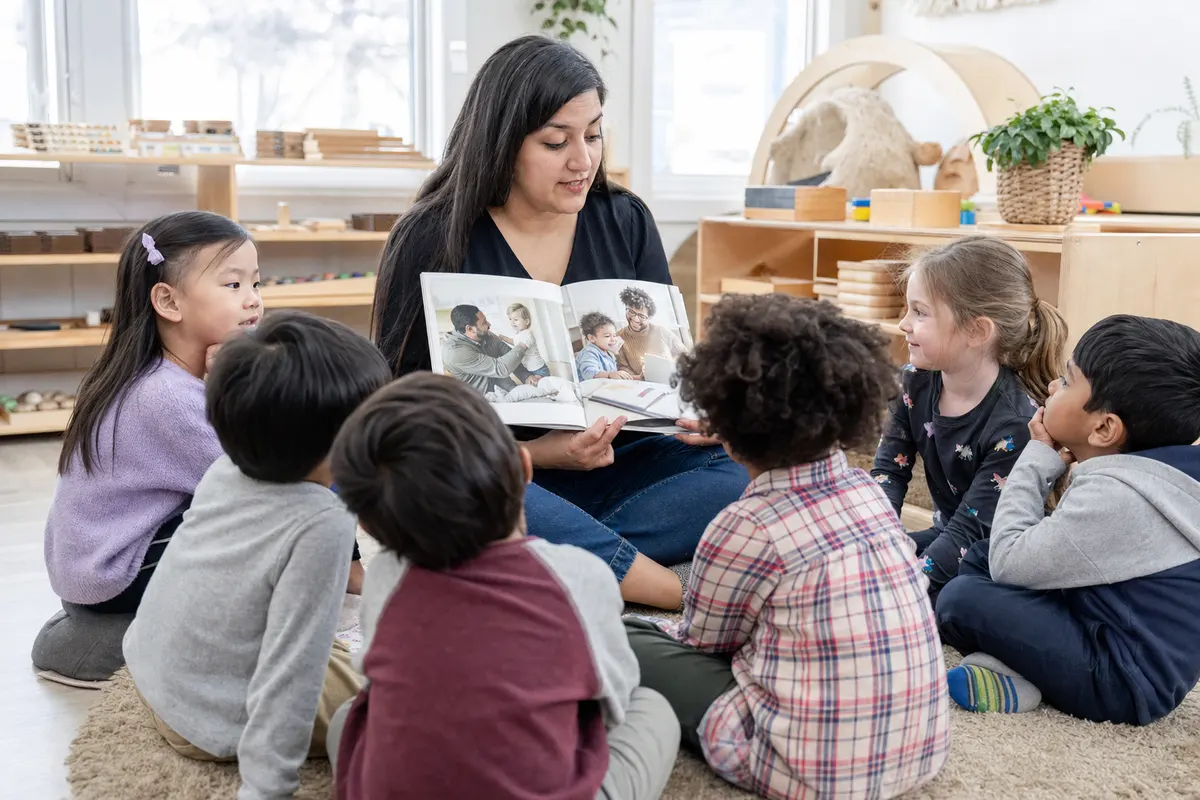
Read multicultural picture books.
Visit your local library and look for age-appropriate stories featuring children, families, and traditions from different cultural backgrounds.
Don’t feel like every book needs to teach a lesson about diversity explicitly.
Sometimes the most natural representation is simply a story about a child going about their day whose family or cultural background happens to be different from your own.
Make art inspired by what you discover.
After reading a story or attending an event, bring out paper, crayons, paint, or playdough.
Ask your preschooler:
“What do you remember?”
Maybe they draw colourful clothing they saw.
Maybe they draw food.
The conversation and experience matter more than producing the perfect Heritage Day craft.
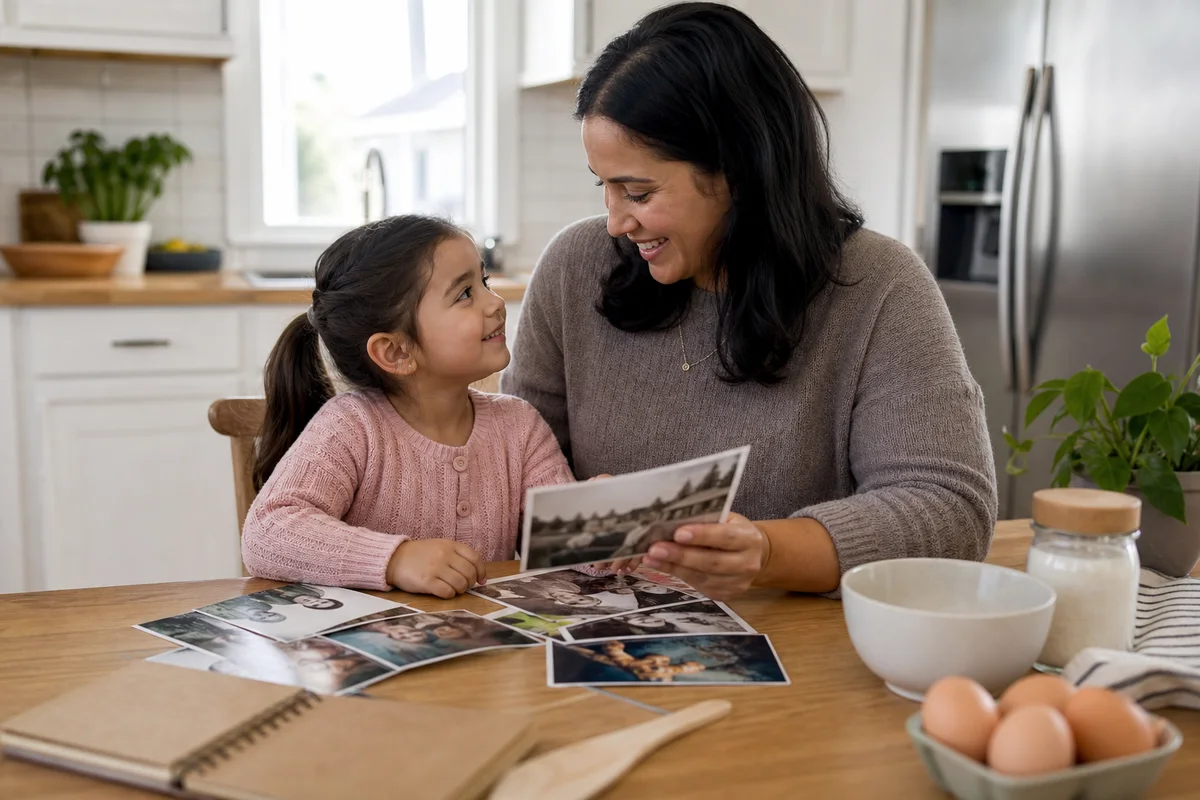
Explore Your Own Family’s Heritage With Your Child
Heritage Day isn’t only about discovering cultures that are unfamiliar to your family.
It’s also a chance to explore your own.
Start with people your child knows.
Pull out family photos.
Show them pictures of parents, grandparents, or great-grandparents.
Tell a simple family story:
“When Grandma was little…”
Preschoolers love hearing that the adults in their lives were once children too.
You could also explore:
| Family Connection | Simple Activity |
| Food | Cook a family recipe together |
| Language | Learn a few family words or expressions |
| Music | Listen to songs your family enjoys |
| Photos | Look through old family pictures |
| Stories | Ask a grandparent to tell a childhood story |
| Celebrations | Talk about a tradition your family follows |
| Place | Find a meaningful country, province, or city on a map |
Your family’s heritage may include several cultures, places, languages, or traditions.
That’s completely fine. You don’t have to squeeze your child’s identity into one box. And if your family doesn’t know much about earlier generations, Heritage Day can still be meaningful. Talk about traditions you’ve created together now. Heritage isn’t only something found in very old photographs.
Learning about family traditions helps children develop a sense of belonging and understand where some of their customs, celebrations, and experiences come from.
We currently provide daycare services in three main Calgary locations:
Turn Heritage Day Into a Play-Based Learning Experience
Young children learn incredibly well through play, which makes Heritage Day easy to connect with everyday early learning. Instead of explaining culture for 20 minutes, create opportunities to explore.
Set up a pretend restaurant
Use toy food, plates, paper, and crayons.
Your child can create a restaurant serving foods they’ve discovered.
Make a pretend menu.
Take orders.
Count plates.
Talk about ingredients.
Suddenly, one activity includes language, early writing, maths, imagination, and cultural exploration.
Create a music station
Listen to several styles of music and provide safe instruments or homemade shakers.
Ask:
“Which music makes you want to move?”
You don’t need your preschooler to remember where every style originated.
You’re building curiosity.
Explore clothing through pretend play
Use scarves, fabrics, dolls, or pictures to talk about the different clothing people wear.
Keep the conversation respectful and avoid turning cultural clothing into costumes or caricatures.
The goal is appreciation and curiosity.
Tell stories with toys
Create a story about several toy characters whose families celebrate differently.
Maybe one character eats a different food at home.
Another speaks two languages.
Another celebrates a holiday the other characters don’t know.
Then ask:
“What could they learn from each other?”
At Clever Daycare, play-based learning can turn themes like Heritage Day into opportunities for children to explore language, music, art, stories, cooperation, and the world around them in an age-appropriate way.
Family-Friendly Ways to Experience Different Cultures in Calgary
Calgary gives families opportunities to experience culture outside books and activities at home too.
For Heritage Day itself, one particularly relevant option in 2026 is the Calgary Heritage Day Festival.
The 2026 festival takes place at Eau Claire Plaza on Monday, August 3, from noon to 6 p.m.
The event is free and celebrates traditions representing more than 30 countries, with music, traditional clothing, dance performances, international food, cultural exhibits, artwork, and community booths.
There are also two playgrounds, including a sand-play area, which makes the event more practical for families bringing younger children.
With a toddler, don’t try to experience everything.
Choose a few things.
Watch one dance performance.
Try one new food.
Look at colourful clothing.
Listen to music.
Visit a cultural exhibit.
Then ask your child:
“What was your favourite thing we saw today?”
Later in August, Calgary’s GlobalFest is another opportunity to experience cultures from around the world. The 2026 festival runs August 27–30 at Spruce Meadows and includes more than 20 cultural pavilions, international food, live performances, and entertainment.
Heritage Park can also be useful for exploring Alberta’s history with children. Its Historical Village is open daily through August 30 in 2026, making it another possible summer family outing.
Just remember that “culture” isn’t something families only experience at festivals.
Calgary’s diversity is visible throughout the year in libraries, community events, restaurants, neighbourhoods, museums, music, and everyday interactions.
Keep the Learning Going After Heritage Day
The best outcome from Alberta Heritage Day isn’t your preschooler memorizing the names of 15 countries.
It’s curiosity.
You want them to keep asking:
“What’s that?”
“What language are they speaking?”
“What food is that?”
“Why do they celebrate that?”
Keep giving them opportunities to find out.
You could choose one multicultural picture book from the library each month.
Try foods from different parts of the world.
Learn how to say “hello” in another language.
Attend community events.
Talk about where different foods, music, or traditions come from.
And continue exploring your own family’s stories too.
Most importantly, model respectful curiosity yourself.
Children pay attention to how adults talk about people who look, speak, eat, dress, or celebrate differently from them.
Alberta’s heritage also includes the histories, cultures, languages, and traditions of First Nations, Métis, and Inuit peoples. Families may choose to explore Indigenous stories, artwork, music, or cultural experiences as part of Heritage Day learning.
At Clever Daycare, helping children explore the wider world can happen naturally through stories, creative activities, music, pretend play, conversations, and interactions with others.
Heritage Day might provide the theme for one day, but values such as curiosity, kindness, inclusion, and respect for others are things children can practise throughout the year.
FAQ
When is Alberta Heritage Day in 2026?
Alberta Heritage Day falls on Monday, August 3, 2026. It’s observed on the first Monday of August each year.
Is Alberta Heritage Day a statutory holiday?
No. The Government of Alberta lists Heritage Day as an optional general holiday, rather than one of Alberta’s standard general holidays. Individual employers may choose to recognize it.
Why does Alberta celebrate Heritage Day?
Heritage Day was established to recognize and celebrate Alberta’s cultural heritage. Today, events across the province highlight history, cultural diversity, traditions, food, music, arts, and communities.
How do you explain heritage to a preschooler?
Keep it concrete: “Heritage is the stories, foods, music, language, celebrations, and traditions families share and pass along.” Then use examples from your own family.
What are easy Alberta Heritage Day activities for toddlers?
Try multicultural picture books, music and dancing, family photos, a simple cultural food activity, storytelling, drawing, or pretend play.
How can I teach my child about other cultures respectfully?
Use real books, stories, music, food, community experiences, and conversations. Encourage respectful questions and avoid stereotypes or presenting an entire culture through a single costume, food, or celebration.
Is there a Calgary Heritage Day event for families in 2026?
Yes. The Calgary Heritage Day Festival is scheduled for August 3, 2026, from noon to 6 p.m. at Eau Claire Plaza. Admission is free, and the event features cultural experiences representing more than 30 countries.
What’s the difference between Heritage Day and Alberta Day?
Heritage Day takes place on the first Monday of August and focuses on Alberta’s heritage and cultural diversity. Alberta Day is September 1, marking the anniversary of Alberta becoming a province in 1905.
How can we explore our own family’s heritage?
Look through old photos, prepare a family recipe, listen to meaningful music, talk with grandparents or relatives, explore family languages, and share stories about where family traditions came from.
Do Heritage Day activities need to focus only on Alberta history?
No. Alberta Heritage Day celebrates both the province’s history and its multicultural society. Families can explore Alberta’s past while also learning about the many cultures and communities that are part of Alberta today.