In Calgary, ‘Daycare’ isn’t just one thing; it’s a dozen different systems, schedules, and styles. From Montessori to Nature-based, and from licensed centers to family day homes, the options are enough to make any parent’s head spin. This guide is your map to the Calgary childcare landscape, designed to help you stop searching and start finding the right fit.
The easiest way to understand the different daycare types in Calgary is to break them down into three simple categories:
- Daycare by age group
- Daycare by schedule and hours
- Daycare by program style and environment
Once parents clearly understand these categories, it becomes much easier to narrow down the right option.
If you are feeling overwhelmed by the number of daycare options in Calgary, our team at Clever Daycare can help you understand which childcare environment may fit your child’s age, personality, and daily routine best.
| Daycare Type | Best For | Age Group | Schedule Type | Main Advantage |
| Infant Daycare | Families needing care for babies | 0–18 months | Full-time or part-time | Close supervision and infant-focused care |
| Toddler Daycare | Active and social toddlers | 18 months–3 years | Full-time or part-time | Social interaction and routine building |
| Preschool Daycare | School readiness and early learning | 3–5 years | Part-time or full-time | Kindergarten preparation |
| School-Age Care | Working parents with school-aged children | 5+ years | Before and after school | Flexible care around school hours |
| Licensed Daycare Center | Families wanting structured childcare | Multiple age groups | Mostly full-time | Organized routines and regulated standards |
| Family Day Home | Children who prefer smaller settings | Multiple age groups | Flexible schedules | Home-like environment and smaller groups |
| Montessori Daycare | Independent and curious learners | Usually 2.5–6 years | Full-time or part-time | Child-led and hands-on learning |
| Drop-In Daycare | Parents needing occasional childcare | Various age groups | Flexible or drop-in | No fixed weekly commitment |
| Part-Time Daycare | Families with flexible schedules | Various age groups | Limited weekly days | Lower commitment and gradual transition |
| Nature-Based Daycare | Active children who enjoy the outdoors | Usually 2+ years | Full-time or part-time | Outdoor learning and physical activity |
We mainly offer two daycare options for parents: drop in childcare for flexible care and Regular hours childcare for consistent routines.
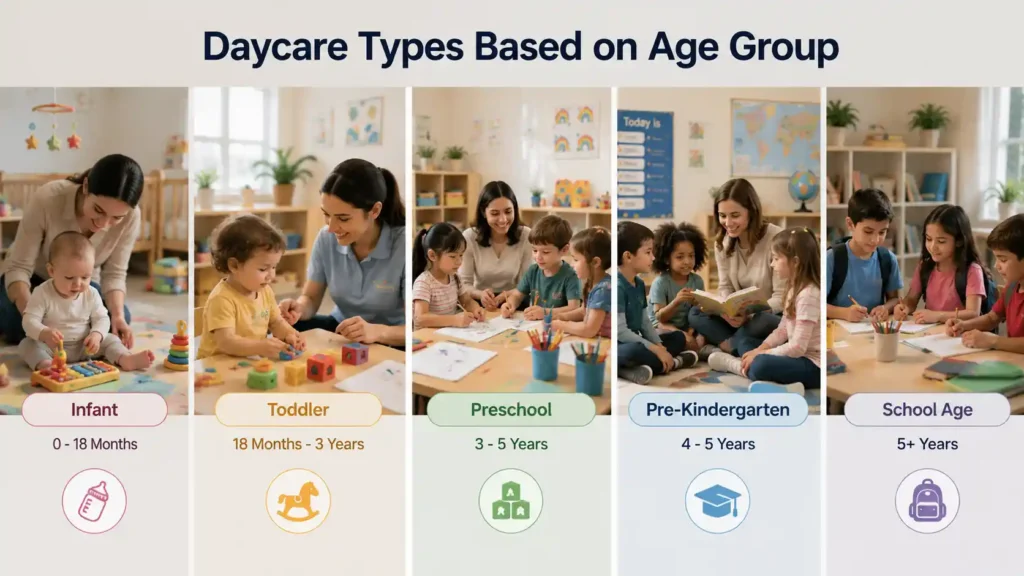
Daycare Types Based on Age Group
Infant Daycare (0 to 18 Months)
Infant daycare programs are designed for babies who need close supervision, feeding support, daytime naps, diaper changes, and a calm environment.
These programs usually have:
- Lower child-to-staff ratios
- Quiet sleeping areas
- Bottle feeding support
- Sensory play activities
- Frequent caregiver communication with parents
Infant care spots in Calgary are often limited, and waitlists can be long, especially in licensed daycare centers.
This type of daycare is usually best for:
- Parents returning to work after parental leave
- Families needing full-time childcare for babies
- Parents looking for structured infant routines
Toddler Daycare (18 Months to 3 Years)
Toddler daycare focuses more on movement, communication, routines, and social interaction. Children at this age are active, curious, and learning independence very quickly.
Most toddler daycare programs include:
- Group play
- Language development
- Music and movement
- Early learning activities
- Outdoor play
- Snack and meal routines
This is one of the busiest age groups in daycare because toddlers need constant supervision and engagement.
Toddler daycare works well for children who are beginning to:
- Socialize with other children
- Follow simple routines
- Build communication skills
- Develop emotional regulation
Preschool Daycare (3 to 5 Years)
Preschool daycare programs are more structured and focus heavily on preparing children for kindergarten and school routines.
These programs commonly include:
| Preschool Focus | Why It Helps |
| Early literacy | Builds school readiness |
| Numbers and counting | Supports cognitive development |
| Group activities | Improves social confidence |
| Independent tasks | Encourages responsibility |
| Classroom routines | Makes kindergarten transition easier |
Many preschool programs in Calgary combine learning with play-based activities rather than strict academic instruction.
Kindergarten Programs (4 to 6 Years)
Kindergarten programs help children prepare for a more structured school environment while still encouraging creativity, play, and social development.
At this stage, children begin to develop stronger communication skills, longer attention spans, and greater independence in daily activities.
Most kindergarten programs include:
- Early reading and writing activities
- Basic math and problem-solving
- Creative play and art projects
- Group learning activities
- Social skill development
- Structured daily routines
These programs are designed to help children feel more confident before entering full-time elementary school.
Kindergarten programs are often a good fit for children who are beginning to:
- Follow classroom instructions independently
- Participate in group learning
- Develop early academic skills
- Build confidence in social settings
- Adjust to longer daily routines
Our childcare programs are designed for every early learning stage:
- Infant childcare in Calgary
- Toddler daycare in Calgary
- Preschool childcare in Calgary
- Kindergarten daycare in Calgary
Daycare Types Based on Schedule and Hours
Full-Time Daycare
Full-time daycare is the most common childcare option for working parents.
Children usually attend:
- 5 days per week
- Full working-day hours
- Consistent daily schedules
This option provides stable routines and ongoing caregiver relationships.
Full-time daycare is ideal for:
- Full-time working parents
- Parents with fixed schedules
- Families needing consistent childcare
Part-Time Daycare
Part-time daycare allows children to attend only certain days or half-days each week.
For example:
- 2 or 3 days weekly
- Morning-only programs
- Afternoon-only care
Part-time childcare is popular among:
- Parents working flexible schedules
- Families easing children into daycare
- Stay-at-home parents want social interaction opportunities for their children
Drop-In Daycare
Drop-in daycare is one of the most flexible daycare options in Calgary.
Instead of following a fixed weekly schedule, parents can book childcare only when needed, which is one of the main benefits of drop-in daycare for busy parents.
This option is commonly used for:
- Appointments
- Temporary work shifts
- Errands
- Backup childcare
- Occasional childcare needs
Some drop-in daycare centers offer hourly care, while others require booking, depending on availability. Availability may vary significantly depending on the daycare and demand
This type of daycare is especially useful for parents with unpredictable schedules. Our complete guide to drop-in daycare covers exactly how it works.
Extended Hours Daycare
Some Calgary daycare centers offer extended childcare hours for parents working outside traditional office schedules.
This may include:
- Early morning drop-off
- Evening or Weekend childcare
- Shift-work schedules
- Flexible pickup times
Extended-hours daycare is often important for:
- Healthcare workers
- Hospitality employees
- Emergency service workers
- Parents working rotating shifts

Daycare Types Based on Program Style
Licensed Daycare Centers
Licensed daycare centers are regulated childcare facilities that follow Alberta childcare rules related to:
- Safety
- Staffing ratios
- Programming
- Nutrition
- Caregiver qualifications
Children are usually separated into classrooms by age group. If you are comparing this with home-based options, see our guide on licensed vs unlicensed daycare services.
Parents often choose licensed centers because they offer:
- Structured routines
- Multiple educators
- Organized learning environments
- Consistent standards
Family Day Homes
Family day homes operate inside private homes and usually care for smaller groups of children.
Compared to larger daycare centers, these programs often feel:
- Quieter
- More personal
- More flexible
- More home-like
Children of different ages may spend the day together in the same environment.
This option can work well for children who feel overwhelmed in larger group settings.
Montessori Daycare
Montessori daycare programs use a child-led learning style focused on independence and hands-on activities.
Instead of highly structured teacher-led instruction, children are encouraged to explore learning materials at their own pace.
Parents often choose Montessori daycare because of its focus on:
- Independence
- Self-confidence
- Problem-solving
- Calm classroom environments
- Practical life skills
Outdoor and Nature-Based Daycare
Nature-based daycare programs spend significant time outdoors throughout the year.
These programs focus on:
- Outdoor exploration
- Physical activity
- Nature learning
- Creative play
- Reduced screen time
This daycare style can be a great fit for energetic children who enjoy active environments.
Our daycare centers are mainly located in these Calgary communities:

How to Choose the Right Daycare Type for Your Child
Choosing the right daycare in Calgary becomes much easier when parents focus on their child’s real needs instead of trying to find the “most popular” daycare. The best option usually depends on your child’s age, personality, your schedule, and the type of environment where your child feels comfortable.
| What You Need Most | Daycare Option That May Fit Best |
| Full-time childcare during work hours | Licensed full-time daycare |
| Smaller and quieter environment | Family day home |
| Flexible or occasional childcare | Drop-in daycare |
| Strong school readiness focus | Preschool daycare |
| Independent learning style | Montessori daycare |
| Outdoor activity and movement | Nature-based daycare |
| Care for infants and babies | Infant daycare program |
| Before and after school support | School-age care program |
| Social interaction and group activities | Licensed daycare center |
| Flexible weekly scheduling | Part-time daycare |
Many parents in Calgary spend weeks comparing daycare programs without knowing which option actually matches their child’s emotional and developmental needs.
Choosing Daycare Based on Age
Different age groups need very different types of care. Infants usually need quiet environments with close supervision, stable caregivers, and flexible feeding and nap routines. Toddlers often do better in active daycare settings where they can socialize, play, and build routines. Preschool-aged children may benefit more from structured programs that include early learning and kindergarten preparation. Whatever the age, there are real benefits of daycare for children across social and emotional growth.
Because of this, parents should first make sure the daycare is actually designed for their child’s stage of development, not just convenient or affordable.
Choosing Based on Your Child’s Personality
Some children love busy social environments and adjust quickly to larger daycare centers. Others become overwhelmed in loud classrooms and feel safer in smaller-group settings, such as family day homes.
A very active child may enjoy outdoor or play-based daycare programs, while independent children sometimes adapt well to Montessori environments where learning is more self-directed.
The goal is to choose an environment where your child can feel emotionally comfortable, not just supervised.
Every child adjusts to daycare differently. Some children thrive in social classroom settings, while others need calmer and smaller environments to feel secure.
Choosing the Right Schedule
Parents should also think realistically about the type of childcare schedule they need. Full-time daycare is usually best for families needing reliable daily care during working hours. Part-time daycare can work well for flexible schedules or gradual transitions into childcare. Drop-in daycare is often helpful for parents who only need occasional childcare or have changing work schedules.
A daycare that does not fit your real daily routine can quickly become stressful, even if the program itself is good.
Choosing Between Larger Centers and Smaller Daycares
Licensed daycare centers usually offer more structure, organized learning activities, and larger social environments. Family day homes are often quieter, more personal, and may work better for children who need calmer settings.
Neither option is automatically better. Some children thrive in larger classrooms, while others adjust better in smaller environments with fewer children.
What Parents Should Look for During Tours
Visiting daycare programs in person is one of the most important parts of the decision process. Parents should pay attention to how caregivers interact with children, how comfortable the children seem, and whether the environment feels calm, clean, and well-organized.
It also helps to ask simple but important questions about daily routines, naps, meals, outdoor play, communication with parents, and how staff handle difficult moments or emotional situations.
In many cases, parents quickly notice whether a daycare feels welcoming and supportive once they walk through the door.
Making the Final Decision
The best daycare choice is usually the one that balances your child’s emotional comfort, your family’s schedule, and the type of learning environment you want for your child. A daycare does not need to be the biggest or most expensive option in Calgary to be the right fit. What matters most is that your child feels safe, supported, and comfortable spending their day there. For a step-by-step approach, read how to choose the best daycare in Calgary.
Get Help Choosing the Right Daycare Option in Calgary
Choosing the right daycare in Calgary can feel stressful when every program seems similar online. Our team at Clever Daycare helps parents understand the real differences between daycare types, learning styles, schedules, and childcare environments so families can make confident decisions based on their child’s actual needs. Whether you are looking for infant daycare, preschool programs, flexible childcare, or full-time daycare options in Calgary, getting the right guidance early can make the entire process much easier.
Clever USP: since we offer multiple styles (licensed, full-time/ part-time, and different age groups), we better say it clearly so the reader knows they’ve found their match.
FAQ
Which Daycare Types Qualify for Alberta Affordability Funding?
Many licensed daycare centers, preschool programs, and approved family day homes in Alberta may qualify for government childcare affordability funding. Eligibility usually depends on the provider’s licensing status, the child’s age, and the type of childcare program offered. Parents should always confirm directly with the daycare provider whether affordability funding is available and already included in the monthly childcare fees.
What is the best type of daycare for infants in Calgary?
For infants, many parents prefer licensed infant daycare programs or smaller family day homes because they usually provide closer supervision, consistent caregivers, and quieter environments that better fit feeding and nap routines.
What is the difference between a daycare center and a family day home?
A licensed daycare center usually has larger groups, structured schedules, and separate classrooms by age. A family day home operates inside a private home with smaller group sizes and a more personal, home-like environment.
Is Montessori daycare better than regular daycare?
Montessori daycare is not automatically better for every child. It works best for children who enjoy independent learning, calm environments, and hands-on activities. Some children may do better in more social or structured daycare settings instead.
At what age can children start daycare in Calgary?
Many daycare programs in Calgary accept infants between 6 and 12 months of age, depending on licensing, staffing, and program availability.
How much does daycare cost in Calgary?
Daycare costs in Calgary vary by age group, schedule, and type of daycare. Infant care is usually more expensive because it requires lower staff-to-child ratios, while part-time and drop-in daycare may cost less overall depending on usage. It also pays to know the hidden daycare costs that apply to any program.
What is drop-in daycare, and how does it work?
Drop-in daycare allows parents to use childcare only when needed, rather than following a fixed weekly schedule. Parents usually reserve spots in advance for temporary childcare needs, appointments, work shifts, or occasional care.
How do I know if my child is ready for daycare?
Most children adjust to daycare gradually. Signs of readiness often include comfort around other children, the ability to follow simple routines, and short periods of separation from parents without extreme distress.
What should I ask during a daycare tour?
Parents should ask about daily schedules, meals, naps, caregiver experience, staff turnover, outdoor play, safety procedures, communication with parents, and how caregivers handle difficult behaviour or emotional situations.
How early should I apply for daycare in Calgary?
Many parents join daycare waitlists several months early, especially for infant and toddler care. Popular daycare programs in Calgary can fill quickly, so starting the search early gives families more options.
Which daycare option is best for parents with flexible work schedules?
Parents with changing schedules often prefer part-time daycare, flexible childcare programs, or drop-in daycare because these options offer greater flexibility than traditional full-time daycare.