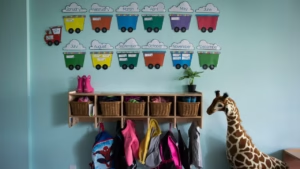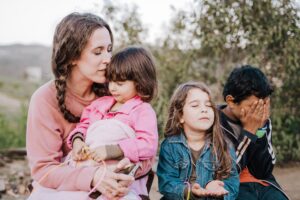
Play-based learning is an approach where children learn new skills through hands-on experiences, exploration and meaningful play. Rather than sitting at a desk for long periods or memorizing facts, children build knowledge by asking questions, experimenting, creating and interacting with others.
That doesn’t mean the classroom is unstructured or that children simply choose toys all day.
A well-designed play-based program is carefully planned. Educators prepare the environment, introduce interesting materials, observe children’s interests and gently guide learning through conversations, questions and new experiences.
The learning goals are very real. The difference is that children often don’t realize they’re learning because the activities feel enjoyable and meaningful.
Our daycare programs include both emergency daycare in Calgary and dependable Regular Hours Daycare to support different family schedules and needs.
Why Play Works So Well
Young children naturally learn by doing.
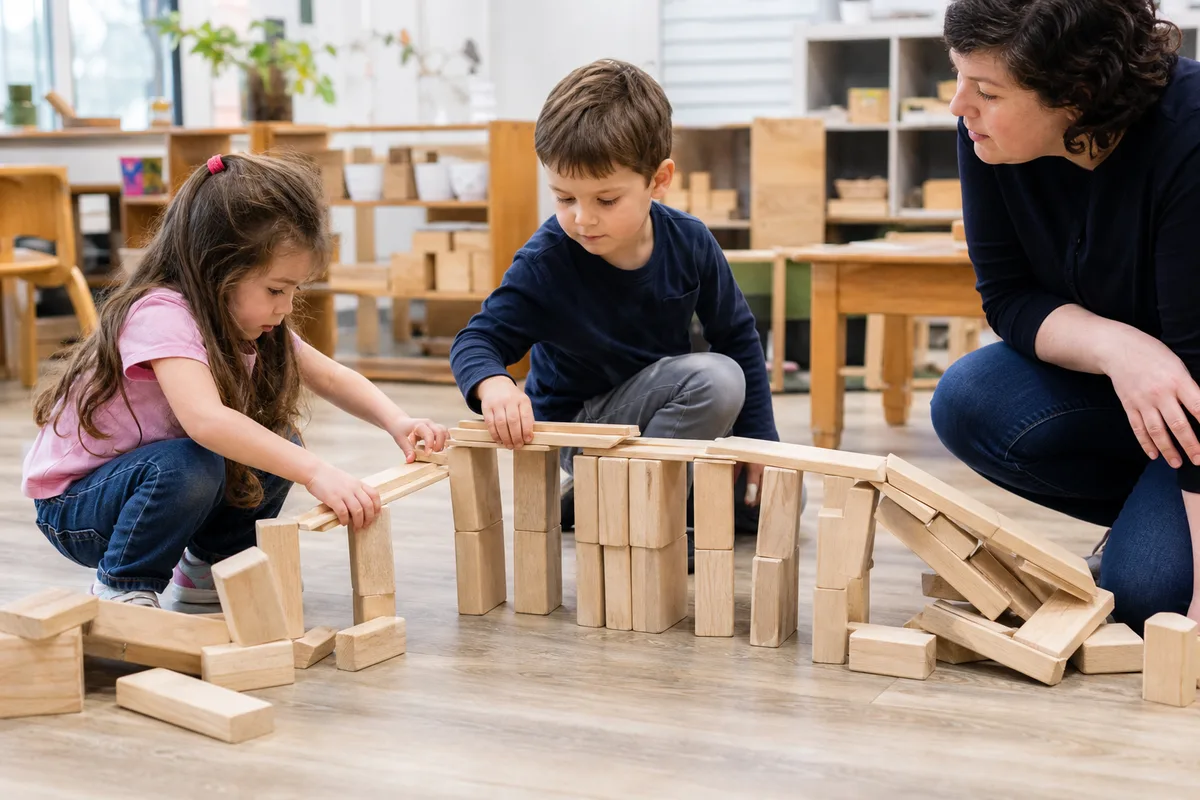
Think about how a toddler learns to stack blocks. They aren’t reading instructions or listening to a lecture about balance. They try, make mistakes, adjust and try again.
The same process happens throughout early childhood.
Whether children are mixing colours, building with blocks, pretending to be veterinarians or digging in the garden, they’re constantly making predictions, solving problems and discovering how the world works.
That’s why learning through play in early childhood supports much more than creativity it helps children build skills they’ll use throughout school and beyond. For the bigger picture on how this fits into the province’s framework, see our guide to early childhood education in Alberta.
What ‘Emergent Curriculum’ Means
One of the most misunderstood ideas in early childhood education is emergent curriculum.
Some parents hear the word “emergent” and assume there is no plan. In reality, it’s almost the opposite.
An emergent curriculum begins with children’s interests, questions and observations. Instead of deciding every activity months in advance, educators watch what captures children’s attention and build meaningful learning experiences around those interests.
Learning Starts With Curiosity
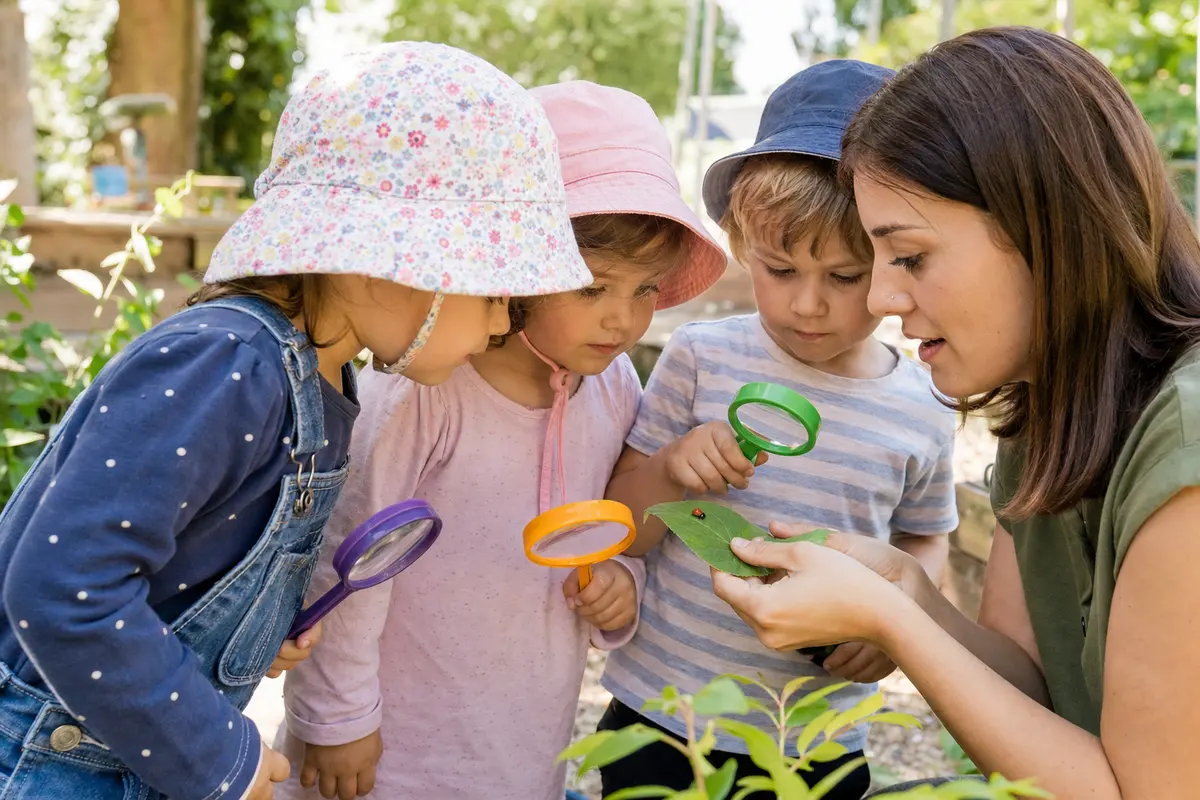
Imagine a group of children notices a ladybug outside.
Instead of quickly moving on, the educator encourages the conversation.
The children begin asking questions.
Where does it live?
Why does it have spots?
Can it fly?
Over the next week, that simple discovery might inspire books about insects, counting ladybug spots, painting bugs, collecting leaves, building tiny habitats and learning new vocabulary.
What began as one child’s observation becomes an entire learning experience that naturally includes science, language, maths, creativity and teamwork.
Educators Still Have Learning Goals
Emergent curriculum doesn’t mean children decide everything.
Educators still have clear developmental goals in mind. They simply choose learning experiences that connect those goals with children’s genuine interests.
This approach keeps children engaged because the learning feels meaningful rather than forced.
Every Group Looks Different
One preschool class may spend several weeks exploring transportation because children are fascinated by buses and construction vehicles.
Another class may become interested in gardening after noticing flowers growing outside.
Neither topic is “better.”
The curriculum grows from the children themselves, making every classroom unique.
We provide age-based daycare services in Calgary for:
How Children Actually Learn Through Play
Parents sometimes wonder whether children are learning enough when they spend so much time playing.
The answer is often yes much more than it appears on the surface.
A simple activity can support several areas of development at the same time.
Language & Literacy
Play creates natural opportunities for conversation.
As children build, pretend, negotiate and explore, they’re constantly learning new words and practising communication.
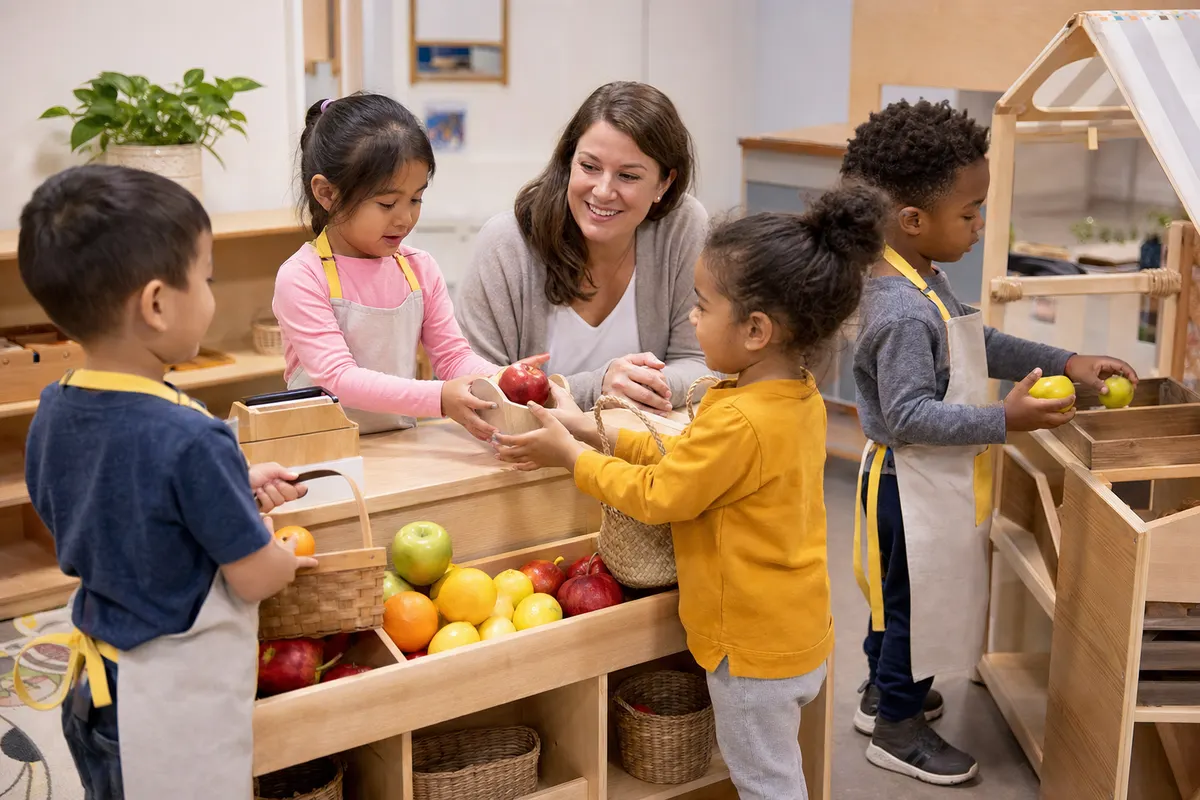
For example, while pretending to run a grocery store, children might:
- Ask questions
- Explain ideas
- Listen to others
- Learn new vocabulary
- Tell stories
- Recognize signs or labels
Storytelling also becomes part of everyday play.
A cardboard box might become a spaceship.
A blanket becomes a castle.
A few toy animals become an entire adventure.
These experiences build language skills long before children begin reading independently.
Math & Problem-Solving
Math in preschool rarely looks like traditional worksheets. Everyday creative activities support the same skills see the benefits of colouring for kids.
Instead, children discover mathematical thinking naturally through everyday experiences.
They might:
- Count building blocks
- Compare sizes
- Sort colours
- Measure ingredients
- Build patterns
- Estimate distances
- Solve puzzles
Imagine two children building a bridge with wooden blocks.
They quickly realize it keeps falling.
Without even noticing, they’re experimenting with balance, weight, shape and engineering while learning persistence and critical thinking.
Those experiences often stay with children much longer than memorizing answers.
Social-Emotional Skills
Perhaps the greatest benefit of play-based learning is social and emotional development.
Every day children practise:
- Sharing
- Taking turns
- Solving disagreements
- Expressing feelings
- Working as a team
- Showing empathy
- Managing frustration
These skills don’t develop through lectures.
They develop through real experiences with caring adults nearby to guide and support children when challenges arise.
Over time, children become more confident, independent and comfortable working with others.
Play-Based vs Academic Preschool
Many parents wonder whether a more academic preschool will give their child a head start.
The answer isn’t always as straightforward as it seems.
Both approaches want children to learn, but they go about it differently.
| Play-Based Learning | Academic Preschool |
| Learning happens through play and exploration | Learning is often more teacher-directed |
| Children actively investigate ideas | Children spend more time receiving instruction |
| Curiosity guides many activities | Lessons usually follow a planned sequence |
| Social, emotional and cognitive skills develop together | Greater focus on early academic practice |
| Children often learn through projects and hands-on experiences | Worksheets and structured activities may be used more frequently |
A quality play-based program doesn’t ignore literacy or maths.
Instead, those concepts are introduced naturally through meaningful experiences.
For example, children may count toy animals while cleaning up, recognize letters during story time or measure ingredients while baking together.
Learning happens throughout the day rather than during one formal lesson.
For most young children, this feels more engaging and less stressful.
What a Play-Based Day Looks Like
Although every preschool is different, many play-based programs follow a similar rhythm.
| Part of the Day | What Children Might Be Doing |
| Arrival | Greeting friends, choosing activities, settling into the classroom |
| Morning exploration | Building, art, sensory play, dramatic play, puzzles |
| Circle time | Songs, stories, discussions and shared activities |
| Outdoor play | Running, climbing, nature exploration and games |
| Snack or lunch | Practising independence and conversation |
| Project work | Investigating a topic based on children’s interests |
| Quiet time | Reading, calming activities or rest |
| Afternoon exploration | Small group activities, creative projects and free exploration |
What looks like “just playing” often includes dozens of learning opportunities.
Children move naturally between creativity, movement, communication, problem-solving and social interaction throughout the day.
Because activities are varied, children also have opportunities to discover what interests them most.
Our three main daycare locations in Calgary include:
Questions to Ask a Program About Their Curriculum
Every preschool describes its program a little differently.
Instead of focusing only on labels like “play-based” or “academic,” ask questions that help you understand what children actually experience each day. Our guide on how to choose the best daycare in Calgary lists more questions worth asking on a tour.
Here are some helpful questions:
- How do you plan learning activities?
- How much of the day is child-led?
- How do educators support children’s interests?
- How do you encourage language development?
- How are early literacy and maths introduced?
- How much outdoor learning is included?
- How do you handle disagreements between children?
- How do you communicate children’s progress with families?
- What does a typical day look like?
- Can parents visit the classroom before enrolling?
The answers will often tell you much more than a brochure ever could.
A great early learning program should be able to explain not only what children do, but why those experiences matter.
Choosing the Right Learning Environment
There isn’t one perfect preschool for every child. Comparing the different types of daycare in Calgary can help narrow the options.
Some children thrive in highly structured environments, while others become deeply engaged when they have opportunities to explore, ask questions and learn through play.
Rather than asking which philosophy is “best,” it can be more helpful to ask which environment matches your child’s personality, interests and stage of development. If your child is more reserved, it helps to know how shy children adjust to daycare.
A warm classroom, caring educators and meaningful relationships often have a much bigger impact than any single teaching method.
When children feel safe, curious and excited to explore, they’re in a wonderful position to learn.
Discover Play-Based Learning at Clever Daycare
At Clever Daycare, we believe children learn best when they feel confident, supported and genuinely interested in what they’re exploring.
Our educators create engaging play experiences that encourage curiosity, creativity, communication and independence while helping children develop the skills they’ll need for Kindergarten and beyond.
Every day includes opportunities for children to learn through play, build friendships, ask questions and discover the world around them in ways that are meaningful for their age and development.
If you’d like to see what a play-based classroom looks like in action, we’d love to welcome you for a tour and answer any questions you have about our curriculum.
FAQ
What is play-based learning?
Play-based learning is an educational approach where children develop language, social, cognitive and physical skills through meaningful play, exploration and hands-on experiences rather than relying mainly on formal instruction.
What is an emergent curriculum?
An emergent curriculum is a flexible approach where educators build learning experiences around children’s interests, questions and observations while still working toward important developmental goals.
Is play-based learning effective?
Yes. High-quality play-based programs help children develop communication, problem-solving, creativity, confidence, self-regulation and early academic foundations in age-appropriate ways.
Is play-based learning better than an academic preschool?
Neither approach is automatically better. Many families choose play-based programs because young children often learn best through active exploration, relationships and hands-on experiences rather than formal lessons alone.
Do children learn reading and maths through play?
Absolutely. Children begin developing early literacy and maths skills while reading stories, playing games, building with blocks, measuring ingredients, counting objects and solving everyday problems.
What does child-led learning mean?
Child-led learning means educators pay attention to children’s interests and encourage them to explore ideas while providing guidance, materials and support to deepen learning.
Is there still structure in a play-based classroom?
Yes. A quality play-based program has daily routines, learning goals and thoughtful planning. The difference is that learning happens through engaging experiences instead of long periods of direct instruction.
How do educators know children are learning?
Educators observe children’s conversations, play, projects, problem-solving and interactions throughout the day. These observations help them plan future experiences that build on each child’s development.
Can play-based learning prepare children for Kindergarten?
Yes. Play-based programs help children develop many of the skills teachers value most, including confidence, communication, independence, cooperation, curiosity and early literacy and numeracy foundations.
What should I look for when visiting a play-based preschool?
Look for children who are engaged, educators who interact warmly, inviting learning spaces, opportunities for outdoor play, open-ended materials and classrooms where curiosity and conversation are encouraged every day.