Why Is My Toddler So Aggressive?
If your toddler has started hitting, biting, pushing, or having intense emotional outbursts, you’re not alone. Aggressive behaviour in toddlers is common and is often part of normal development. Most toddlers are still learning how to communicate, manage big emotions, and interact appropriately with others. The key is understanding why the behaviour is happening and helping your child learn healthier ways to express themselves.
Keep reading to learn what causes toddler aggression, when it may be a concern, and what parents can do to help.
Our two main childcare services include flexible drop in daycare and dependable Regular hours daycare in Calgary for busy families.
Common Reasons Behind Toddler Aggression
Toddlers experience strong emotions long before they develop the language and self-control needed to manage them effectively. As a result, aggression is often a form of communication rather than intentional misbehaviour.
Some of the most common causes of toddler aggression include:
Frustration From Limited Communication Skills
Many toddlers know what they want but struggle to express it clearly. When they can’t communicate their needs, frustration may turn into hitting, screaming, or throwing objects.
Big Emotions They Don’t Know How to Handle
Toddlers experience anger, disappointment, jealousy, excitement, and frustration just like adults do. The difference is that they are still learning how to manage those emotions appropriately.
Seeking Attention
Sometimes aggressive behaviour gets a strong reaction from adults. Even negative attention can unintentionally reinforce certain behaviours if children learn itelicitss immediate responses.
Fatigue, Hunger, or Overstimulation
A tired, hungry, or overstimulated toddler is often more likely to become irritable and aggressive. Basic physical needs can have a major impact on behavior.
Difficulty Sharing and Taking Turns
Toddlers are still developing empathy and self-control. Conflicts over toys, space, and attention are common during this stage of development.
Changes in Routine or Environment
Starting daycare, welcoming a new sibling, moving homes, or changes in family routines can sometimes trigger increased aggression as children adjust.
We offer daycare programs in Calgary for different age groups, including:
Different Types of Aggressive Behaviour
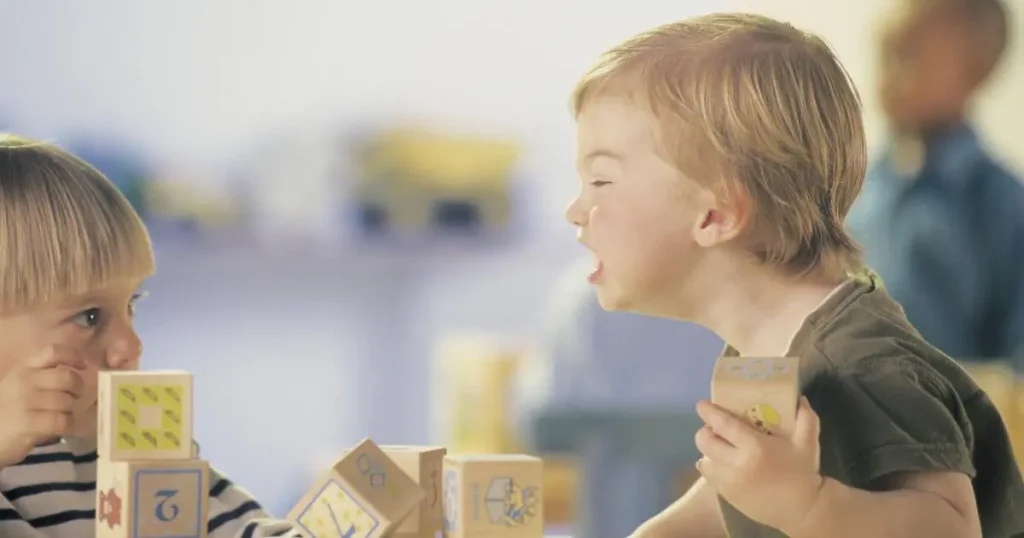
Not all aggression looks the same, and knowing which type you’re seeing can make it easier to respond in the right way. Most toddlers move through a few of these as they grow, so don’t worry if your little one shows more than one.
Physical Aggression
This is the most familiar kind: hitting, biting, kicking, pushing, pulling hair, or throwing things. It usually shows up when a toddler feels overwhelmed and doesn’t yet have the words (or the patience) to handle the moment any other way.
Verbal Aggression
As your child’s language grows, frustration can come out through screaming, yelling, or saying “no!” and “go away!” with surprising force. It can catch you off guard, but it’s often a sign your toddler is trying to use words, just not gentle ones yet.
Object-Directed Aggression
Sometimes the feelings land on toys instead of people, think throwing a truck across the room or knocking over a tower. It’s a way of releasing big emotions, and it’s actually a little safer than aiming them at a playmate.
Self-Directed Aggression
Occasionally a toddler turns frustration inward, with behaviours like head-banging or hitting themselves. This one can be especially worrying for parents. A little is often part of working through a meltdown, but if it’s frequent or intense, it’s worth a chat with your pediatrician.
Reactive vs. Intentional Aggression
Most toddler aggression is reactive, an in-the-moment burst when they’re tired, hungry, or upset. Less often, it’s intentional, like pushing a friend to grab a toy. Both are normal, and both fade as your child learns better ways to get what they need.
The good news? With gentle, consistent guidance, every one of these tends to soften over time as your toddler builds the words and self-control to express those big feelings more kindly.
Is it Normal for Toddlers to Hit, Bite, or Push?
In many cases, yes.
Aggressive behaviour is a common part of toddler development, especially between the ages of 1 and 4. During these years, children are learning important skills such as:
- Emotional regulation
- Communication
- Problem solving
- Sharing
- Empathy
- Impulse control
Because these skills are still developing, occasional hitting, biting, pushing, or tantrums can be expected.
What matters most is not whether aggressive behaviour happens occasionally, but whether children are gradually learning better ways to express themselves over time.
Parents are often relieved to learn that many aggressive behaviours decrease naturally when children receive consistent guidance and developmental support.
When Should Parents Worry About Toddler Aggression?
While some aggression is developmentally normal, there are situations where parents may want to seek additional guidance.
You may want to speak with a childcare professional or pediatrician if:
- Aggressive behaviour is becoming more frequent over time
- Your child regularly injures other children or adults
- Extreme aggression continues well beyond age expectations
- Your child appears unable to calm down after incidents
- Aggression significantly impacts daycare, family life, and social interactions
- There are concerns about speech, developmental, or emotional delays
Early support does not mean something is wrong. It simply helps families better understand what may be contributing to the behaviour and how to address it effectively.
How to Respond to Toddler Aggression Effectively
There is rarely a quick fix for aggression. Instead, consistent guidance and supportive teaching tend to produce the best long-term results.
Stay Calm During Aggressive Incidents
Children learn from adult reactions. Staying calm helps prevent situations from escalating and models healthy emotional regulation.
Teach Emotion Words
Help your toddler identify feelings by using phrases such as:
- “You’re feeling frustrated.”
- “You’re angry because you wanted that toy.”
- “You’re upset because it’s time to leave.”
The more emotional language children have, the less likely they are to communicate through aggression.
Set Clear and Consistent Boundaries
Simple, consistent messages work best.
For example:
“We do not hit people.”
“We use gentle hands.”
“We can be angry, but we cannot hurt others.”
Praise Positive Behaviour
Children often repeat behaviours that receive attention. Notice and praise moments when your child shares, waits patiently, or handles frustration appropriately.
Practice Social Skills
Role-playing, reading books about emotions, and supervised play opportunities can help toddlers learn better ways to interact with others.
Maintain Consistent Routines
Predictable schedules often help reduce stress and improve emotional regulation.
Many parents find that behaviour improves significantly when sleep schedules, meal times, and daily routines become more consistent.
We currently provide daycare services in three main Calgary locations:

Can Daycare Help Reduce Aggressive Behaviour?
Yes, high-quality daycare environments can play an important role in helping toddlers develop social and emotional skills.
In daycare, children regularly practice:
- Sharing and taking turns
- Following routines
- Communicating with peers
- Managing frustration
- Solving simple conflicts
- Building friendships
Experienced educators help guide children through challenging social situations while teaching appropriate ways to express emotions.
Children are not expected to arrive with perfect social skills. In fact, learning these skills is one of the major benefits of quality childcare.
At Clever Daycare, our educators support children in developing communication skills, emotional awareness, self-confidence, and positive social behaviours through daily interactions and age-appropriate activities.
Supporting Your Toddler’s Social and Emotional Growth
Every toddler has moments of frustration, strong emotions, and challenging behaviours. The goal isn’t to eliminate every outburst but to help children gradually develop the skills they need to express themselves in healthy ways.
If you’re concerned about your toddler’s social development, emotional regulation, or readiness for group care, the team at Clever Daycare is here to help. We can answer your questions, discuss your child’s unique needs, and help you explore childcare options that support healthy emotional and social growth.
FAQ
Why does my toddler act aggressively at home but not at daycare?
Many toddlers feel safest expressing strong emotions with their parents. They may use more self-control in daycare and release pent-up feelings once they return home.
Is biting more common in toddlers than in older children?
Yes. Biting is relatively common among toddlers because language skills and impulse control are still developing. Most children outgrow this behaviour with guidance and maturity.
Can lack of sleep cause aggressive behaviour in toddlers?
Absolutely. Overtired children often have more difficulty managing emotions, handling frustration, and controlling impulses.
Should I punish my toddler for hitting?
Rather than focusing on punishment, experts generally recommend teaching appropriate behaviour, setting clear boundaries, and helping children understand and express their feelings.
How long does toddler aggression usually last?
Many aggressive behaviours decrease as children develop stronger language skills, emotional regulation, and social understanding. Significant improvements are often seen between ages 3 and 5.
Can starting daycare make aggression worse?
Some children may show temporary behaviour changes during major transitions. However, quality daycare programs often help children develop social skills, emotional regulation, and positive peer interactions over time.
When should I seek professional help for toddler aggression?
Consider seeking guidance if aggression is severe, persistent, increasing over time, causing injuries, or significantly affecting your child’s relationships, learning, or daily life.